
Ryan Institute Co-Executive Director William Van Nostrand answers questions about the potential risk of brain bleeds associated with newly-approved lecanemab and similar treatments. This summer, the FDA granted full approval to lecanemab, an antibody treatment for Alzheimer’s disease. The antibody—a protein that works by clearing amyloid-beta protein “plaques” in the brain, a signature of Alzheimer’s disease—has […]
Continue reading "Q&A: The risks of brain bleeds in antibody treatments for Alzheimer’s disease"Posts
Van Nostrand lab is part of $8 million grant for U.S. and European consortium on brain clearance in CAA

William Van Nostrand, co-executive director of the George & Anne Ryan Institute for Neuroscience at the Univeristy of Rhode Island, is part of a team awarded a five-year, $8 million grant from the prestigious Leducq Foundation.
Continue reading "Van Nostrand lab is part of $8 million grant for U.S. and European consortium on brain clearance in CAA"New grant from Cure Alzheimer’s Fund supports research into the link between ApoE4 and CAA

A new grant supports research by the Van Nostrand lab to investigate the effects of the ApoE 4 genotype in cerebral amyloid angiopathy, a disorder that commonly occurs with Alzheimer’s disease.
Continue reading "New grant from Cure Alzheimer’s Fund supports research into the link between ApoE4 and CAA"Ryan Institute expert discusses new Alzheimer’s disease research showing that changes in the brain also can be seen in the eyes

Assistant Professor Jess Alber answers questions about new research that supports her own work toward screening for Alzheimer’s disease during routine eye exams.
Continue reading "Ryan Institute expert discusses new Alzheimer’s disease research showing that changes in the brain also can be seen in the eyes"Looking to spinal motor neurons to investigate the mysteries of ALS
Using his unique in vivo approach, Assistant Professor Marin Manuel investigates electrical activity in the spinal motor neurons in a disease model of amyotrophic lateral sclerosis. Also known as Lou Gehrig’s disease, amyotrophic lateral sclerosis (ALS) is a mysterious and fatal disorder where nerve cells in the brain and spinal cord break down, rapidly progressing […]
Continue reading "Looking to spinal motor neurons to investigate the mysteries of ALS"First-in-kind models will help break new ground in studying Alzheimer’s disease and related disorders
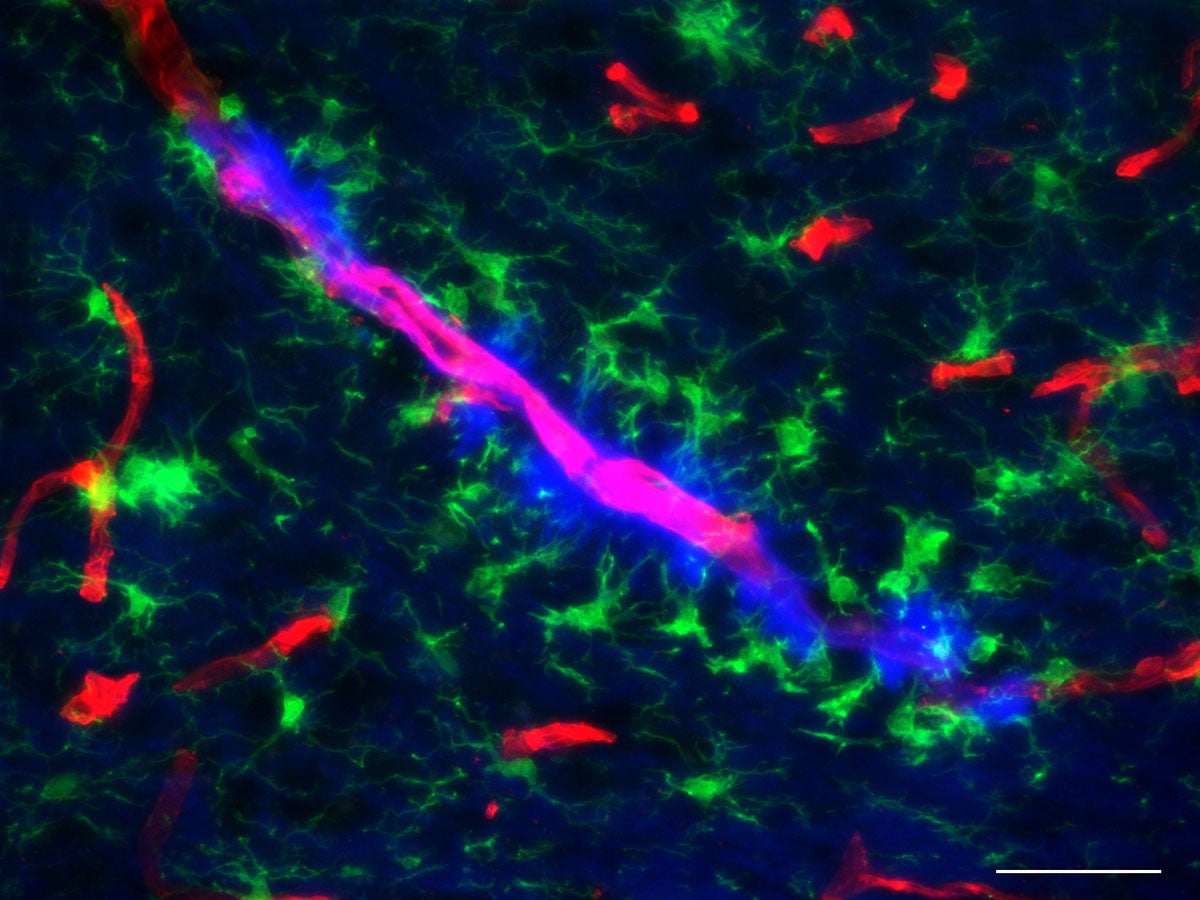
Gene-edited rat models will reflect vascular pathology associated with Alzheimer’s and related disorders.
Continue reading "First-in-kind models will help break new ground in studying Alzheimer’s disease and related disorders"Ryan Institute researchers are part of breakthrough studies on “mature” neurons, epigenetics in aging

Three Ryan Institute faculty are co-authors on breakthrough studies at Northwestern University and Harvard Medical School.
Continue reading "Ryan Institute researchers are part of breakthrough studies on “mature” neurons, epigenetics in aging"Q&A: Giuseppe Coppotelli, Ph.D.
Giuseppe Coppotelli, Ph.D. investigates how protein homeostasis deregulation and mitochondrial dysfunction in the aging brain could contribute to chronic inflammation and dementias such as Alzheimer’s disease. What drew you to this area of research?Growing up, I was always curious about living organisms. How do plants grow? How do they know to turn their leaves to […]
Continue reading "Q&A: Giuseppe Coppotelli, Ph.D."Q&A with Jaime Ross, Ph.D.
Assistant Professor Jaime Ross investigates fundamental questions of aging. In this Q&A, she shares her thoughts on the questions that drive her research and what she finds most encouraging about the aging process. How did you become interested in studying aging?It happened by accident. I was studying a robust model of premature aging developed at […]
Continue reading "Q&A with Jaime Ross, Ph.D."Cytoskeleton Keys
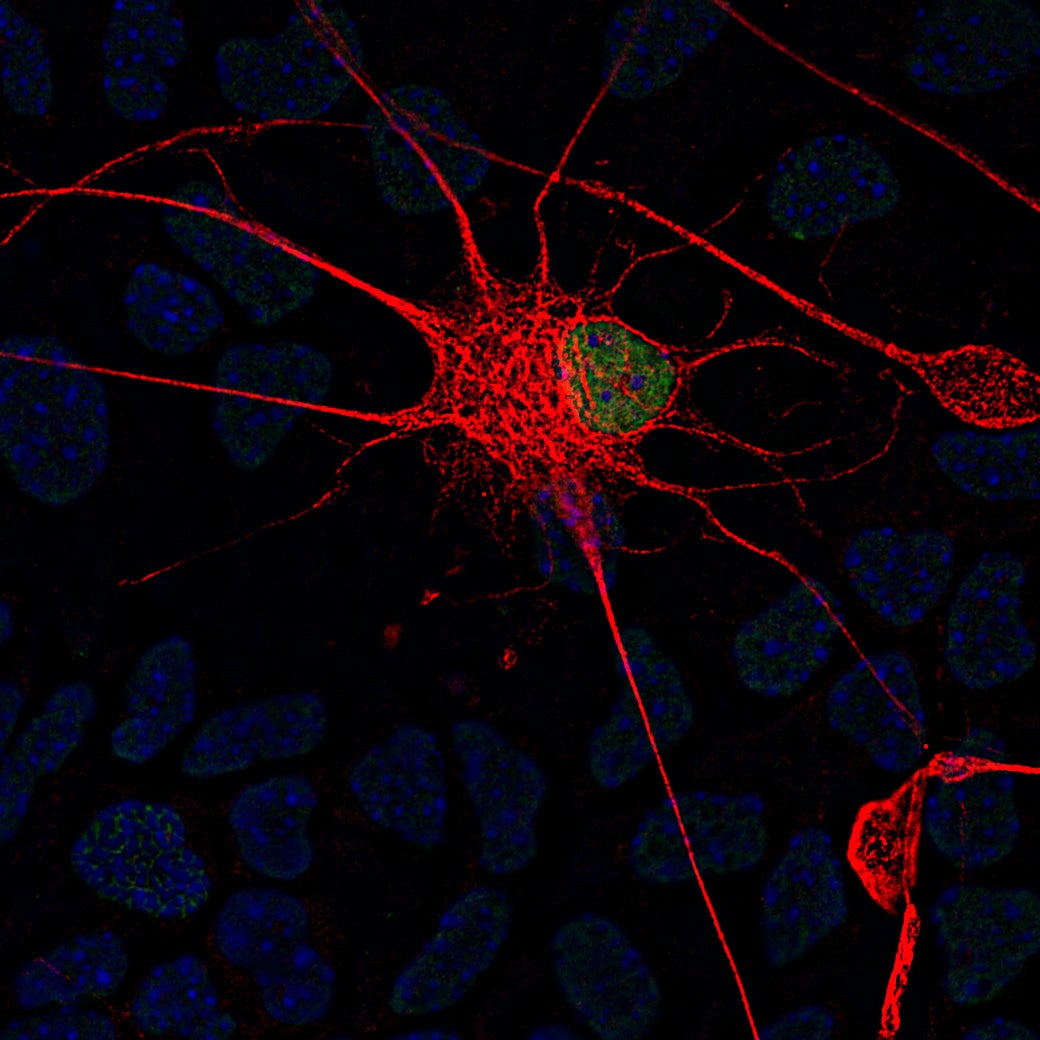
New faculty member Claudia Fallini investigates how modulation of the cytoskeletal protein actin could potentially be an ALS therapy.
Continue reading "Cytoskeleton Keys"